Sunday, 6 July 2014

'Great is the art of beginning, but greater the art is of ending'


I have stumbled upon this quote while reading through Elgar's Enigma Variations. It is not his, but American poet Henry Wadsworth Longfellow's, taken from his Elegiac Verse, In The Harbour:

'Great is the art of beginning, but greater the art is of ending;

Many a poem is marred by a superfluous verse.'
Henry Wadsworth Longfellow (1807-1883)


The placement of the quote, scribbled at the second ending of the piece, makes it even more meaningful in two ways. Firstly, the Finale is Elgar's XIV variation, similar to Longfellows' XIV stanza, where this quote originates. Secondly, according to the foreword in the Novello edition of the full score, some of Elgar's friends thought he might want to rework the original ending. At first Elgar was against the idea, but he seemed willing to consider it. At first he struggled to find a satisfying conclusion, however, in the end he did finish the piece with an extended ending. He must have been so relieved to know that the piece has finally come to conclusion, that he felt an urge to mentioned this quote.  


As long as I can remember, I have always struggled to finish my artworks. I loved to begin a new work, but working on it for so long as to reach a point of satisfaction when you know this piece is truly finished was something I always found very hard to achieve. I believe that this skill, this perseverance, is what makes the difference, is what makes you eventually succeed - not only in art, but in life in general.  


-PW


Sir Edwar Elgar (1857-1934) (c) Alamy

Wednesday, 21 May 2014

Hector Berlioz - Symphonie fantastique

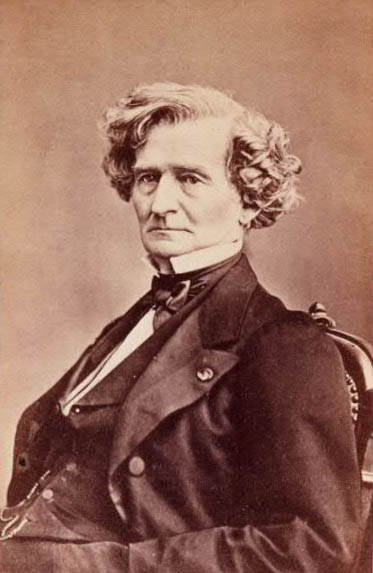
Hector Berlioz (1803-1869)
French composer Hector Berlioz (1803 - 1869) wrote a letter to a friend in 1830 stating:

'I am still unknown. But when I have written an immense instrumental composition which I am now meditating, I intend to go to London to have it performed. Let me win a brilliant success under her very eyes!'

The instrumental composition was to become his first symphony, called the Symphonie fantastique. I have studied the work for the last two weeks and focused intensely on the orchestration, which was by then unconventional and revolutionary. I want to give a breakdown of some of my findings, which will hopefully provide another perspective on how to appreciate Berlioz' arguably most popular work even more.


I - Rêveries - Passions

At rehearsal letter R1 (near the end of the movement) Berlioz gives the instruction: Tout l'orchestre aussi doux que possible, which means that the whole orchestra should play as soft as possible (the instruments are marked ppp). This can be heard at 14:20 in the video below

II - Un Bal

At bar 118, he instructs the violins to play presque rien - almost nothing (17:30)

III - Scène aux Champs

At the beginning of this movement Berlioz wants the first oboe derrière la scene to be played behind the stage, to further establish the distant answer call to the english horn. You can see the player has left his usual position in the video (22:30).

The other interesting device he used for this movement is his use of four timpani to mimic an oncoming thunderstorm. The players can be seen at 35:33.

IV - Marche au Supplice

At rehearsal mark M, Berlioz is very particular that the bass drum and cymbal should carefully observe their alternating dynamics of ff and mf (41:05).

V - Songe d'une Nuit du Sabbat

At the beginning of the final movement Berlioz sub-divides the violins and violas into 2 and 3 sections, and instructs them to play con sord. a punta d'arco - muted and only with the tip of the bow, to give a shimmer for the cellos and basses (42:48).

A nice little effect occurs at rehearsal letter A, when the piccolo, flute and oboe are instructed to perform a glissando on their instruments (43:20).

Next, Berlioz introduces orchestral bells, which are realised with steel plates in the video reference (45:50). He did remark that when the orchestra has no bells at its disposal, two pianos could be used as a substitute.

The bells are foretelling the DIES IRAE, which is a catholic chant often associated with death or suffering (46:14).

The last in a series of delightful orchestral effects occurs at rehearsal mark M1 with the strings playing frappez avec le bois de l'archet. I won't give the translation here as one must experience the effect without knowing what is happening, to fully appreciate its existence in this context (51:16)!


-PW

Thursday, 8 May 2014

Why film at a gig?

Krystian Zimerman (c) Kasskara and D/G
I have stumbled across this not-so-recent news article by the BBC in which pianist Krystian Zimerman went off stage during one of his concerts. The reason was that someone was filming with their smart-phone an didn't stop doing so even after the concert was interrupted. Therefore he walked off stage and although he finished the recital, he didn't play an encore and was seemingly annoyed. He commented afterwards:

'What happened is theft, pure and simple. It cuts particularly deeply when the artist is of a sensitive nature.'

No matter whether this is professional behaviour or not, the question I am asking myself is simply why bother? Why film at a gig?
There are no good arguments for doing so.

First of all it is disrespectful against the artist as you could not only make him uncomfortable and therefore diminish the performance for you and everyone around, but more importantly you are making the choice of rather looking at a screen and concentrating on filming than enjoying the performance. Roger Waters:

'It would seem to me to show a lack of respect to and care for fellow concert goers, or for that matter the artist.'

Everyone should remember, and those who have been in this position know, that even though you have 'paid' for the artist to perform, he or she is nevertheless performing for your entertainment, not because it is particularly fun to do so. The artist is putting himself in the spotlight for you to have a good time.

Secondly, the footage you create is probably of poor quality and will not be able to represent the event as it unfolded. Another BBC article quotes two girls when asked about their motivation to film at gigs: '[It's] memories, so you don't forget the good times,' however they also say: 'It is a bit annoying though sometimes when there is loads in front of your face and you can't see.' This is quite remarkable: they claim that they film to not forget the good times but say that they can't really see everything sometimes. Well that would imply they don't necessarily have a good time and should rather try to move to a better spot instead of wasting the experience. Which brings me to my final point, what experience?

Going to a concert for me not only meant to listen to the music first and foremost as I am able to do that with superior quality at home (exlcuding classical concerts). It was also about the performance, the experience of the pushing and shoving in the front row, or (as in the concert hall) to enjoy the anticipation of the music to come. This might all be lost while being occupied with filming, there is no experience when you go home apart from having held your smart-phone for an hour.

I am personally very concerned with the incentive of 'sharing' in our society. People seem to be easily motivated to share their lives for everyone to see. And one of the reasons they film at gigs might be that they almost 'need' something to 'share' or that there is an opportunity to share another part of their life. But instead they should rather live their lives, somehting a lot of people seem to forget more and more. I find that very sad as I am believing that the more someone shares the more this person loses its individuality, which might seem paradox at first but not so much after thinking about it.

-PW

Sunday, 13 April 2014

Of Liszt and Beethoven


I have always believed that these two musical masters were somehow connected since I have seen Liszt's piano scores of Beethoven's symphonies for the first time but also because I own a Beethoven piano sonata collection edited by Liszt. However, little did I know that they have actually met, or have they?

It was the year 1822 or 1823...

Liszt, a German with Hungarian roots, was eleven or twelve years of age but already a masterful pianist. His father decided that the young Liszt would miss out on vital musical education in their native home town in Hungary and therefore relocated to Vienna when the boy was 9. His father hoped his son would develop into a concert pianist, with whom he could travel and make money similar to Mozart. His composition teacher was the infamous Antonio Salieri and his piano teacher non other than Carl Czerny, himself a former pupil of Beethoven. Czerny was so impressed with the boys talent at the piano that he tried to persuade Beethoven to listen to him.
Beethoven was profoundly deaf and gradually started to lose his wits in 1822-1823 and in general he showed little interest in prodigies. He was the greatest living composer during that time not only in Vienna but possibly in the whole of Europe. One can only imagine how difficult it must have been for a young boy to get in contact with the master himself. But with Czerny's help, he probably did meet Beethoven. However, what exactly happened seems to be a mystery.


Liszt as a young boy
Liszt himself told the story when asked by one of his students, Ilka Horowitz-Barnay. He said that:

'I was about eleven years old when my venerated teacher Czerny took me to Beethoven. I first played a short piece by Ries. When I had finished Beethoven asked me whether I could play a Bach fugue. I chose the C-minor Fugue from the Well-Tempered Clavier. “And could you also transpose the fugue at once into another key?” Beethoven asked me. Fortunately I was able to do so. After my closing chord I glanced up. The great master's darkly glowingly haze lay piercingly upon me. Yet suddenly a gentle smile passed over his gloomy features and Beethoven came quite close to me, stooped down, put his hand on my head, and stroked my hair several times.'
After playing the opening movement of Beethoven's C-major Piano Concerto, Liszt recalls:
'When I had concluded Beethoven caught hold of me with both hands, kissed me on the forehead, and said gently: “Go! You are one of the fortunate ones! For you will bring joy and happiness to many other people!! There is nothing better or finer!”
Liszt concludes his anecdote with:
'This event in my life has remained my greatest pride – the palladium of my career as an artist. I tell it but very seldom and only to good friends.'

However convincing it sounds, most of it is probably fabricated by Liszt. He mentioned that he visited Beethoven in his home in the 'Schwarzspanierhaus'. Beethoven did not live there any more in 1822/23. But Liszt's recollection dates back to 1875 and by then he was getting old and his memory may not have served him well. Another important detail to take into consideration is Beethoven's loss of hearing. How could he have been able to listen to Liszt's playing? But then again he might have used his ear trumpet or at least followed young Liszt's fingers. And why would Czerny try to persuade Beethoven to listen to someone playing if he knew how bad Beethoven's hearing was? I believe that Beethoven would have been able to appreciate Liszt's talent somehow, if Liszt played. A clue whether Liszt actually performed might be found in Beethoven's conversation books and although it is mentioned that they have possibly met, there is no mention of Liszt playing anything. But this makes me wonder that if they have met, what would they have done apart from playing piano? Beethoven didn't need to show his talents and certainly not to a 11/12 year old boy. It makes only sense that Liszt played for the master.

Beethoven in his later years
Another version of the story exists. This time written in one of Liszt's biographies by Lina Ramann between 1880 and 1894 with the consultation of Liszt. According to Ramann Beethoven attended a concert of Liszt and upon Liszt finishing playing he 'hastily mounted the platform and kissed him [Liszt]'. This kiss was to become the 'Weihekuss', kiss of consecration. The story seems even more unlikely as Beethoven isolated himself from the public more and more and having him in the audience must have been noted, yet no review mentions his attendance. And if Beethoven kissed this young pianist than surely some eye-witnesses would not hesitate to recollect what they saw, yet again no mentioning from anyone in the attendance.

A third recollection of the events comes from Liszt himself again. When asked by August Göllerich about the moment of meeting Beethoven he replied:

'Beethoven appeared at my second concert in Vienna, for the sake of Czerny, and kissed me on the forehead. I never played at his house, but I was there twice.'

He is obviously contradicting himself here, first he said he was at his house then he said that he was there twice but never played.

However, some things match in all three versions. Czerny was the link between Beethoven and Liszt, which seems very likely as it is documented that Czerny was a pupil of Beethoven and a teacher of Liszt. The second match is that Liszt always states to have seen Beethoven. Now that can mean he has talked to the man or that he only saw Beethoven without getting in direct contact with him. And Liszt also always mentions the kiss on the forehead. I don't believe it was dramatic and in public, however I can imagine two things. First, Czerny took Liszt to Beethoven or Beethoven came to Czerny with Liszt being there (possibly at a lesson). Beethoven possibly saw the talent and showed his affection (it is well know that Beethoven believed in the arts and it is therefore not unlikely that he was affectionate to other great artists) by possibly kissing him on the forehead and stroking his hair, after all Liszt was a young boy. A few days later Beethoven might have attended a concert of Liszt, however I think it is unlikely that he made a fuss and jumped on the stage. I believe it is more likely that Liszt saw him in the audience or was introduced to him once again afterwards.


No matter what really happened, I find it fascinating that the possible encounter with Beethoven had an artistic impact on Liszt and that he devoted much of his time promoting Beethoven's works, even when he was already a musical master in his own right.

-PW
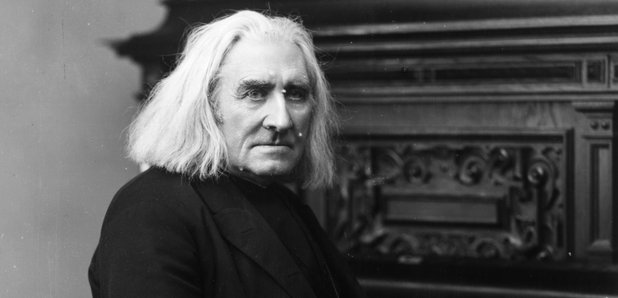
Liszt in his later years